
I stumbled upon a book last month titled “The Role of the Judiciary in the Constitutional Crises of Pakistan”, written by K.M.A. Samdani. It is a book written about 20 years ago by a judge who served over half a century ago. Knowing very little about historic Pakistani judges, I did not pay much heed to his position as a judge. But as I read about his captivating life, this view flipped, as I was astounded by his dignified life on the bench, which continues to inspire.
J. Samdani retired early from his office at a pivotal moment in Pakistan’s judicial history, just like how J. Syed Mansoor Ali Shah and J. Athar Mianullah did last Thursday, 13th November 2025.
The parallel between these two farewells exposes a deeper erosion of the judicial institution. An attack on constitutionalism. And a central question:
If the most independent judges always find themselves at a crossroads between compliance and exit, what does this say about our constitutional and judicial structure?
WHO IS A JUDGE?
The words of Lord Justice Mathew,
A judge is a gentleman first and a gentleman last. If he knows the law so much better,
are quoted often by J.Samdani in his book to define the core characteristics of a judge. In our society, the word “mard-e-momin” is the apt definition according to him, encompassing the spirit of honesty, dignity and an overall superior standard of morality.
Crucially, a judge is the guardian of the Constitution. The Constitution is the highest governing law overseeing the entire country and binding all citizens. As Woodrow Wilson said,
“The constitution of a country is not without its sanctity protected.” A nation may very well be left like a herd of sheep without a shepherd. Hence, the main role of a judge (mard-e-momin), is to protect the constitution.
But how does a judge protect the Constitution?
This obligation of a judge can only be exercised by an independent mind. Independent of personal bias, gain, political motive or status. In J.Samdani’s words, “To make an independent judge, one has to become independent of one’s own self.”
This standard becomes the golden benchmark during a constitutional crisis. When the sanctity of the Constitution is attacked, like how it is today with the 27th Amendment, independent minds on the bench must rise to defend it.
But when subservient minds outvote independent ones, the institution fails to uphold its honour. Here we meet our crossroads.
In this scenario, the independent judge can either leave or work in a system that is built on executive control, favouring only those who agree with the current regime.
The resignation: it is not merely a peaceful exit but a final act of defiance against illegitimate and destructive attacks against the constitution and the entire justice system.
However, is this a sustainable model for future constitutionalism?
THE VITALITY OF A CONSTITUTION
The constitution is the heart of a legal system, beating oxygen through all its branches; from the legislative, judiciary, bar, to the prejudiced civilian seeking justice. It is the supremely hailed document, destined to enshrine fundamental rights and serve as the beacon of light for all. Judges as adjudicators and interpreters of the law derive their power from the Constitution.
Yet, on its own, it remains a mere document. What brings it to life is the legitimacy of the people. It serves as a mirror reflecting the consensus and ideas of the common people. Hence, it must be preserved and jealously guarded against unnecessary tampering.
“It is intended to endure for ages to come”, as stated by Marshall, C. J.
Its stability and longevity are cardinal features, without which it loses its essence and diminishes its status. When those in power attempt the assault of bending the sanctity of the Constitution for political convenience, the institutions go to war.
Between the marching executive and the defending judiciary, the war is fought in the name of the constitution, and when the executive captures more than the judiciary, resignations emerge as the last alarm.
Thus, its protection entails not only upholding its principles encapuslating human rights but also protecting it against unreasonable and unwarranted changes.
THE CAREERS OF J.S. AND J. SMASH
From 1971 to 2025, one quality binds Pakistan’s these two dignified judges: unwavering integrity. The spirit of the “mard-e-momin”, which does not let the head bow to injustice.
On a cold September morning of 1977, a judge sitting in the Lahore High Court granted Zulfikar Ali Bhutto bail.
A decision that his colleagues and fraternity discouraged him from making. A decision that would eventually cost him his career, but not his morals. J.S. believed the case was not based on merit but rather personal vendettas. Hence, his decision was led by the spirit of respecting the dignity of his office, not by personal motives or status.
Throughout his career, he was known as the Sufi judge, continuously siding with minorities with a principled approach. A judge who would welcome hardship with ease but never compromise in the face of duress.
The Provisional Constitutional Order (PCO) required judges to take a fresh oath of office to continue serving under the regime of a military dictator. Taking the oath had its benefits.
A plausible elevation from the LHC to the Supreme Court; an office most dream of but only a few get the privilege to serve in.
For most, on a grander scheme of affairs, an oath is a trivial matter. A mere bureaucratic formality. At the time, the new oath came under military decree, which went against the foundation of Pakistan’s constitutional design. It allowed the executive to reinvent the judiciary at will.
At this crossroad road only two paths remained: compliance with the authoritarian executive, or resignation to uphold the dignity of the judiciary.
Hence, in 1981, after almost a decade-long dedication to his office, he retired from his office.
THE NEW CRISIS WITH THE SAME RESPONSE
Today, lawyers grieve the loss of a similarly dignified gentleman, J. SMASH. A lawyer, teacher, reformist and later judge.
But above all, a true gentleman.
Through his challenging decisions that ran contrarian to political popularism and pressure. Separating his being from his office, reflecting bare independence of mind and spirit. If judges reflected society, then he was the mirror of the honest civilian. A character that not only lawyers hoped to embody, but also a beacon of light for prejudiced civilians.
But history must repeat itself.
The 27th Amendment has breached all standards of reasonability, including the International Standards on Independence of the Judiciary. When the Judicial Commission, formed mainly by executive members, can recommend that the President transfer High Court judges without the consent of the Chief Justice and High Court judges,
the Lords of the profession are reduced to puppets of the current regime.
When a new Federal Constitutional Court is built whose functions are to adjudicate on constitutional matters, the Supreme Court is stripped of its power to protect the constitution.
What is the role of a Supreme Court judge, now that they cannot decide on constitutional matters?
The 27th Amendment, like the PCO, undermines the supremacy and independence of the Supreme Court and subjugates the judiciary under executive control. The constitution is reduced to a mould of clay, taking whatever shape the present government (ruler) desires, assaulting its sanctity.
Hence, for a “mard-e-momin”, the only route remaining is resignation. This is the route that was taken by J. SMASH, as was by J.S. half a century ago. Consequently, the grieving messages, pleas for returns, and nostalgia for better days are seen all around social media and mainstream news.
But this story is not new. This sight is not unseen.
THE FUTURE?
The formation of a Federal Constitutional Court alongside the Supreme Court confuses judicial hierarchy and corrodes established common law principles.
Among young lawyers, many dreamt of serving as a clerk in the Honourable Supreme Court. That dream has dwindled for most, as the judges we aspired to embody walk away in disillusionment.
As J. SMASH points out in his resignation letter, while the 26th Amendment exposed how the judiciary was hardly a model based on independence, the hope of the court overturning it remained.
However, with the 27th Amendment, that hope has completely diminished. The salient factors include the formation of the FDC , unreasonable grant of immunities and extensions to members of the executive.
What is the significance of a resignation?
After all, one may argue, that this act is more a show of personal morality and perhaps even an acceptance of defeat against tyranny.
However, these resignations and early retirements are the telltale sign of constitutional failure.
If the most independent and principled judges keep exiting, the system does not evolve; it corrodes.
When the only way to protect the dignity of the judicial office is to abandon the office, we are not witnessing personal failure. We are witnessing the courts not losing individuals but rather their spines. Until we demand accountability from institutions, history will keep repeating itself.
A BRIGHT SIDE?
J.Samdani writes that the people make the bar, and the bar makes judges; hence, the judiciary reflects the sentiments and beliefs of the common man.
Hence, perhaps, these resignations showcase how remnants of independence in the judiciary remain, connoting the common man’s desire for a life of integrity.
It is tragic that honesty so often finds itself outside, not inside, esteemed offices.
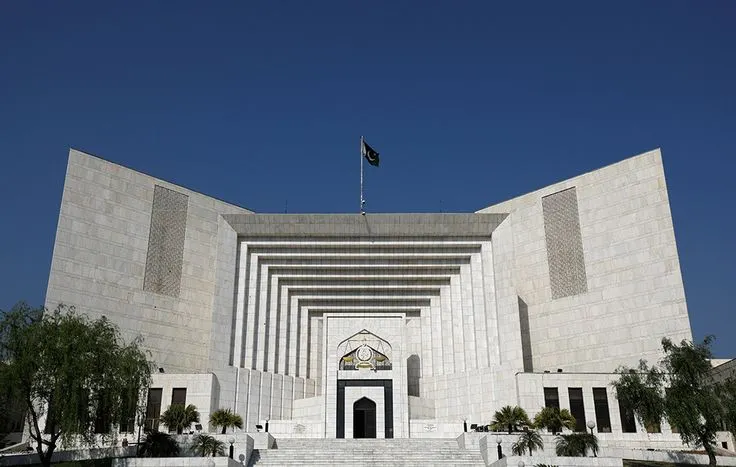
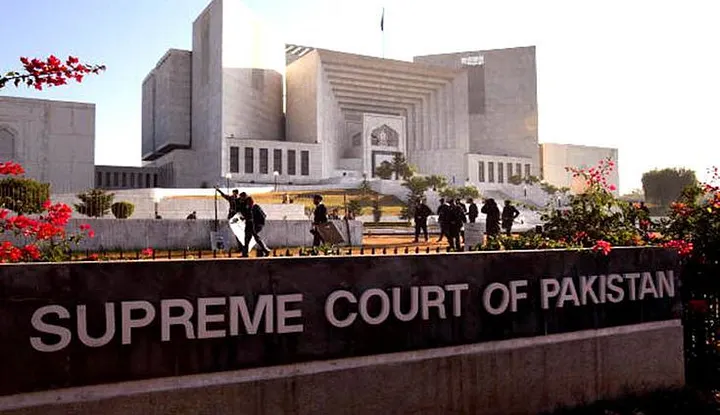
Perhaps all is not lost. Maybe, in the crevices of the white monument in Islamabad, still resides the spirit of the “mard-e-momin”.
The gentleman who rises in the face of adversity, stands against oppression, and fights for justice with a clear conscience, independent of his own interests. Perhaps more will aspire to embody the integrity shown by Justice SMASH and Justice Samdani, ensuring that the judiciary never entirely loses its soul.
However, for a linear progression in the judicial system, the entire nation, including the legal fraternity, bar, and judiciary, must rise to protect the constitution. To uphold justice and resist complacency towards the executive.
For constitutional supremacy, independent minds must not only enter but also build and retain the judicial system.
Individual resignations, while a sight to behold as emblems of integrity, should not be the only resort of the “mard-e-momin”. They should rise in such numbers, with an oceanic unity to break down corrupted structures and defy all attacks against the rule of law.
Then and only then can a constitutional crisis be circumvented.
Till then, perhaps resignations are the best we get.